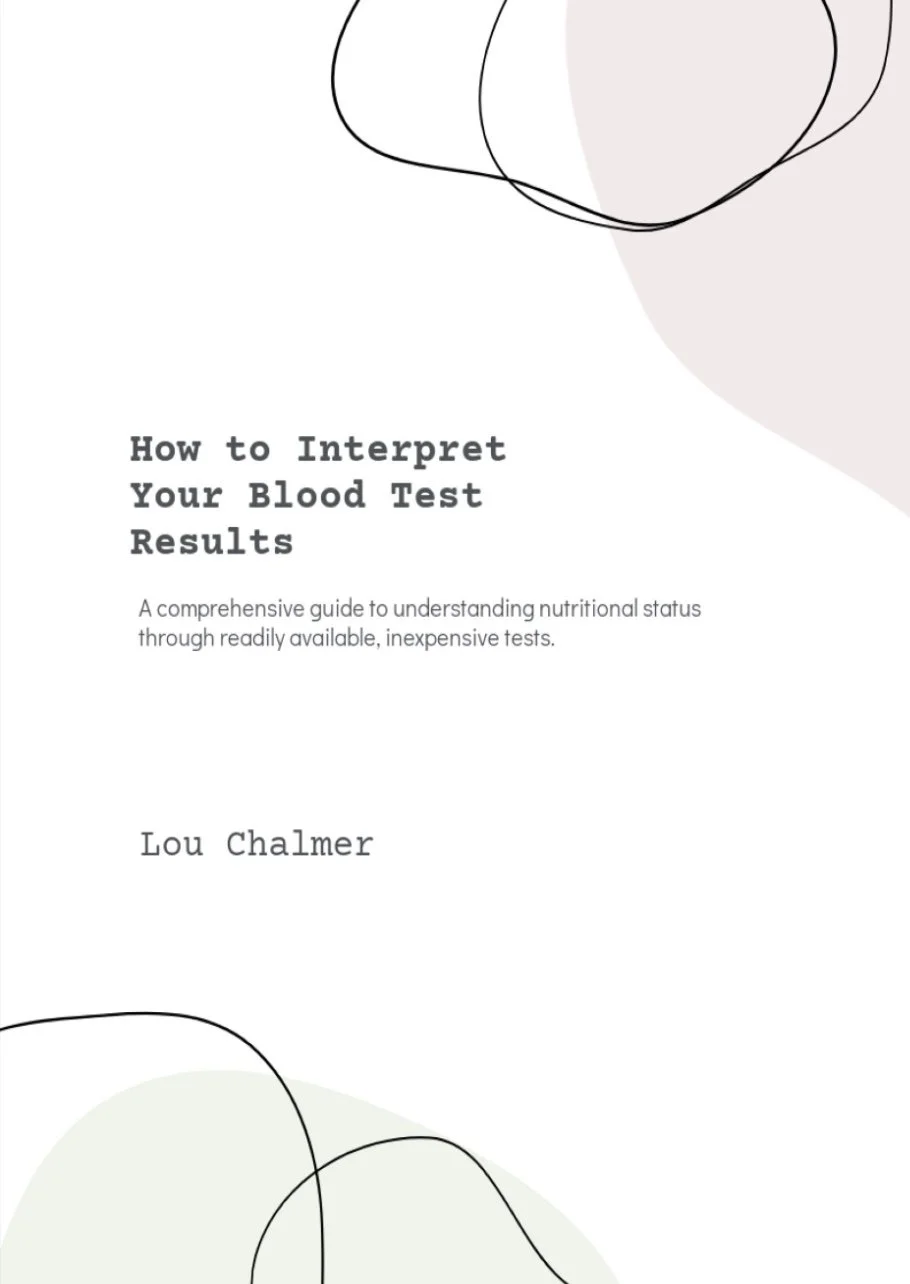
A practical guide to interpreting your own bloodwork the way a functional clinician does. How to Interpret Your Blood Test Results covers more than 80 standard and extended markers — each with a functional optimal range, a clear explanation of what the marker reflects, the patterns worth recognising, and the levers that move it.
What makes this guide different is the methodology. Behind the marker detail sits a structured ten-step process for working through a full set of results, looking for nutrient and system patterns across markers rather than reading each one in isolation. That's how chronic illness actually shows up in bloodwork, and it's not something most online articles or even most clinical reports teach you to see.
Sections cover methylation, full haematology, glucose and lipids (including ApoB, Lp(a), and non-HDL cholesterol), iron studies, trace minerals, thyroid, blood chemistry, inflammation, adrenal function, and male and female sex hormones. You'll also find a Before You Test checklist, a How to Talk to Your GP section written for the Australian context, a fillable Action Plan workbook, and a Quick Reference cheat sheet that summarises every marker in three columns for permanent use.
Written for health-conscious individuals and practitioners alike.
Format: 64-page PDF, A4
Delivery: Secure 24-hour link where you can download the guide
A practical guide to interpreting your own bloodwork the way a functional clinician does. How to Interpret Your Blood Test Results covers more than 80 standard and extended markers — each with a functional optimal range, a clear explanation of what the marker reflects, the patterns worth recognising, and the levers that move it.
What makes this guide different is the methodology. Behind the marker detail sits a structured ten-step process for working through a full set of results, looking for nutrient and system patterns across markers rather than reading each one in isolation. That's how chronic illness actually shows up in bloodwork, and it's not something most online articles or even most clinical reports teach you to see.
Sections cover methylation, full haematology, glucose and lipids (including ApoB, Lp(a), and non-HDL cholesterol), iron studies, trace minerals, thyroid, blood chemistry, inflammation, adrenal function, and male and female sex hormones. You'll also find a Before You Test checklist, a How to Talk to Your GP section written for the Australian context, a fillable Action Plan workbook, and a Quick Reference cheat sheet that summarises every marker in three columns for permanent use.
Written for health-conscious individuals and practitioners alike.
Format: 64-page PDF, A4
Delivery: Secure 24-hour link where you can download the guide